

Milk Production
De Correspondent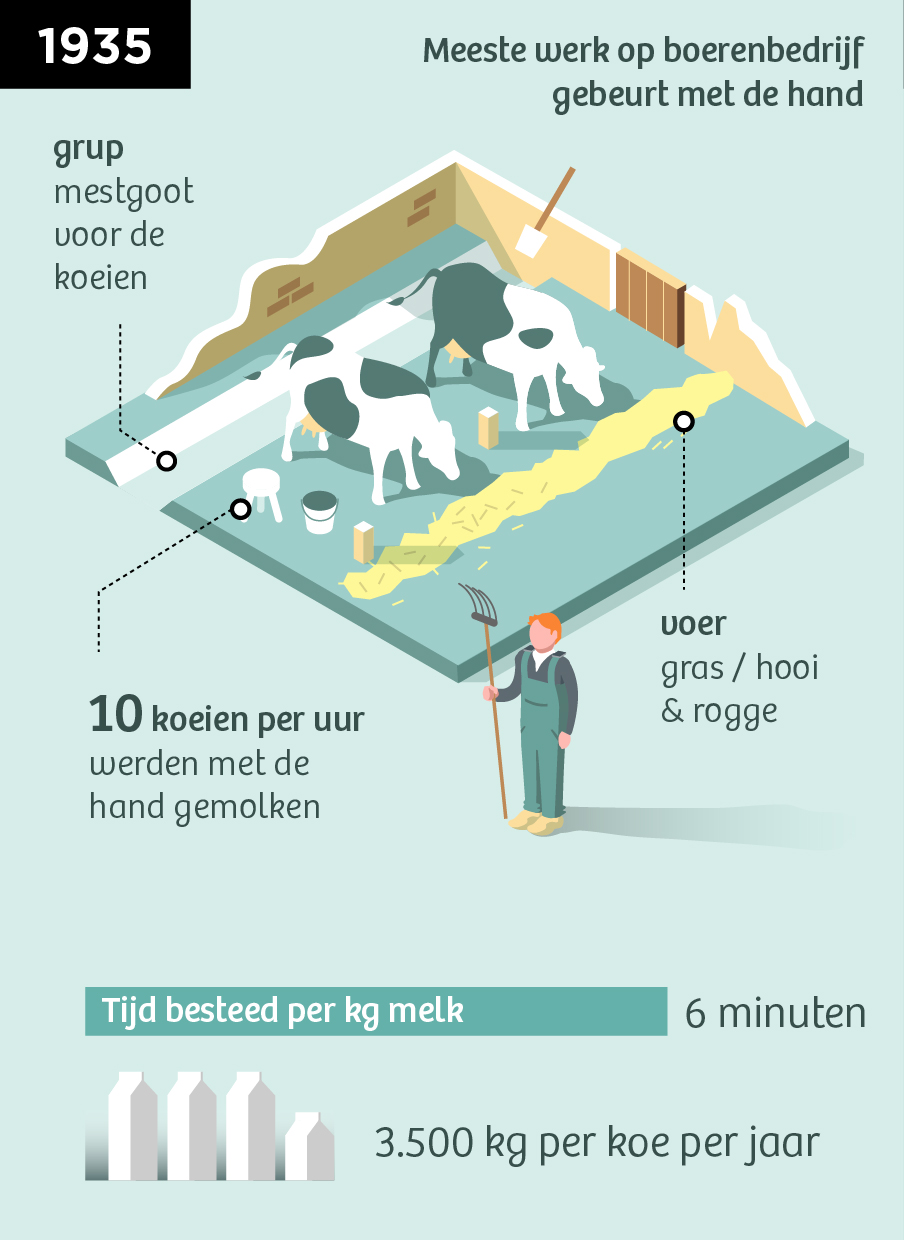
Category
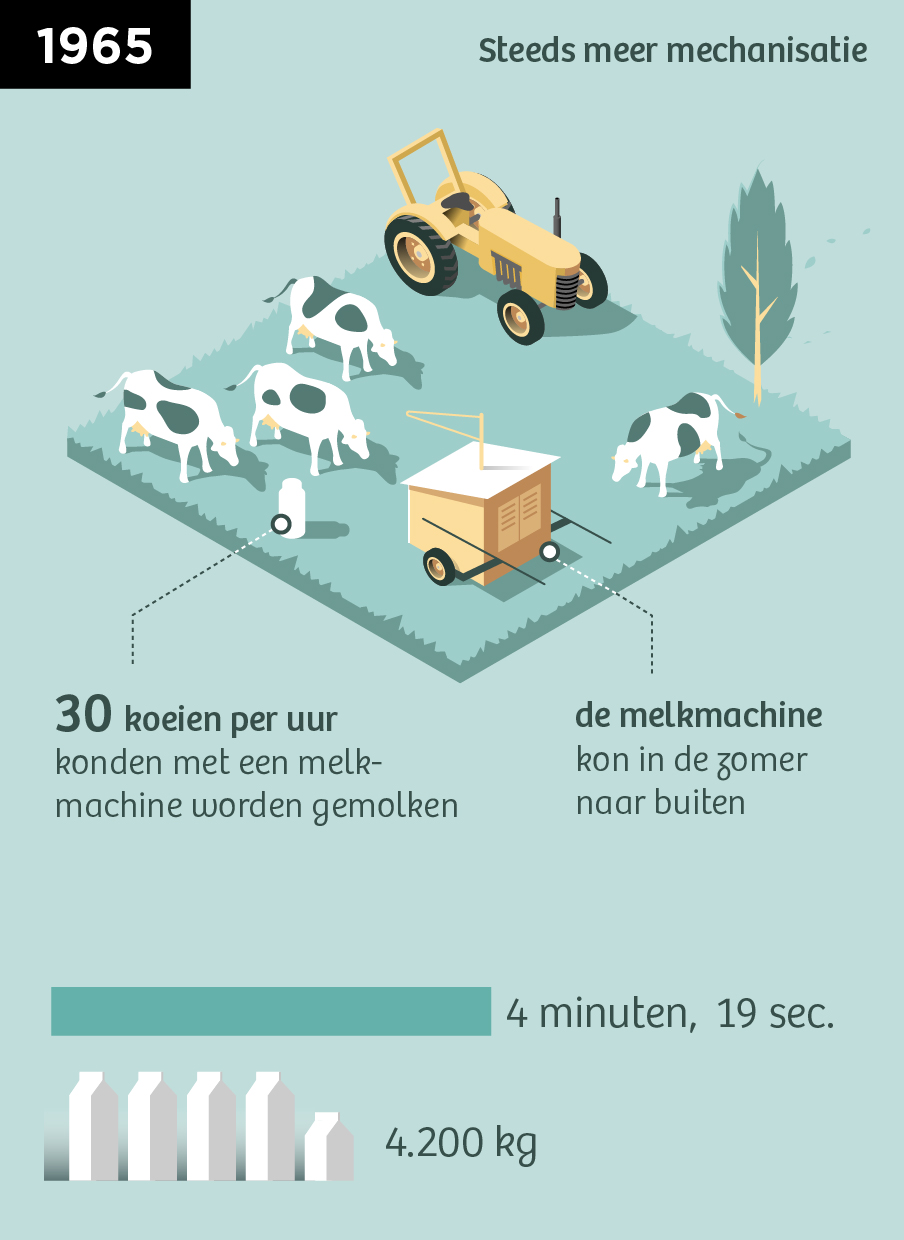
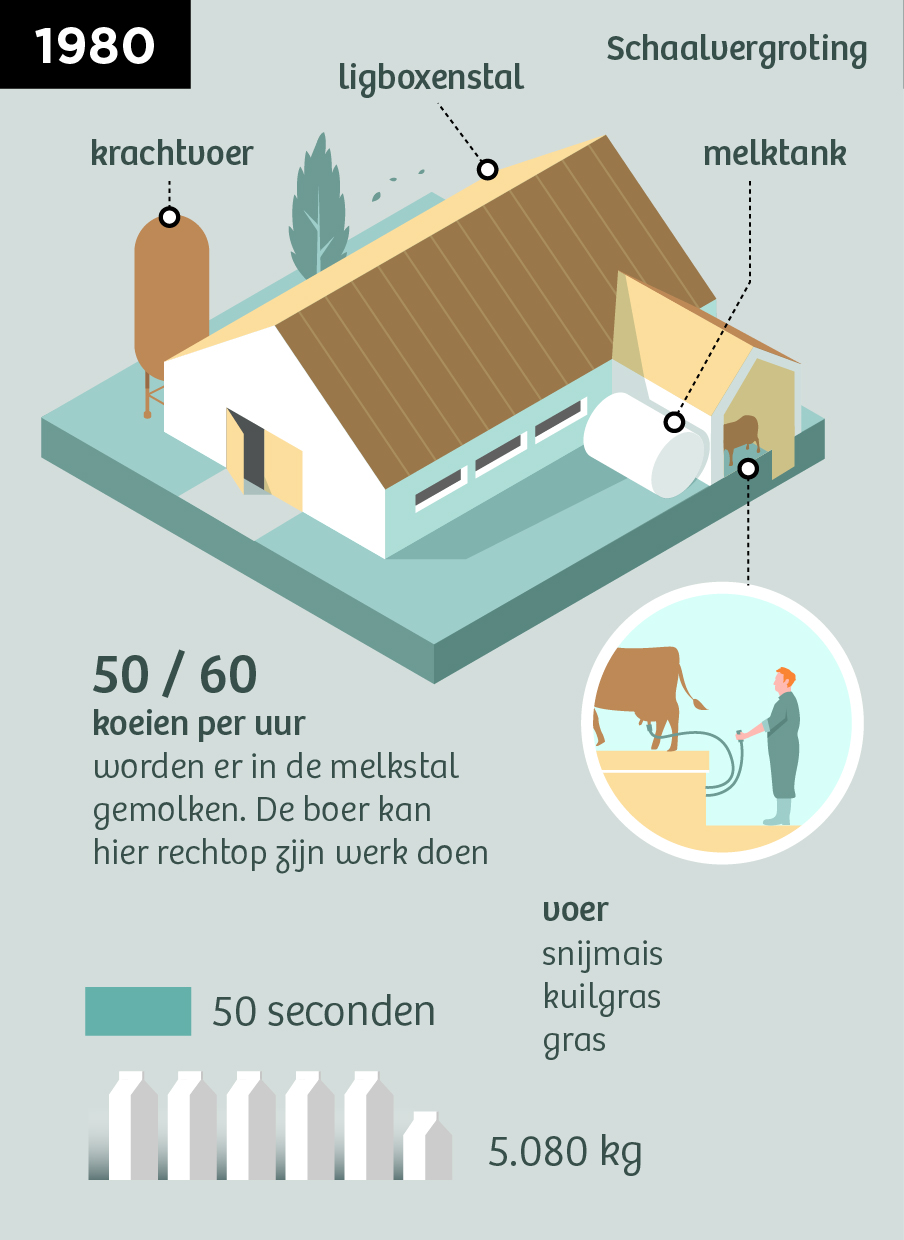
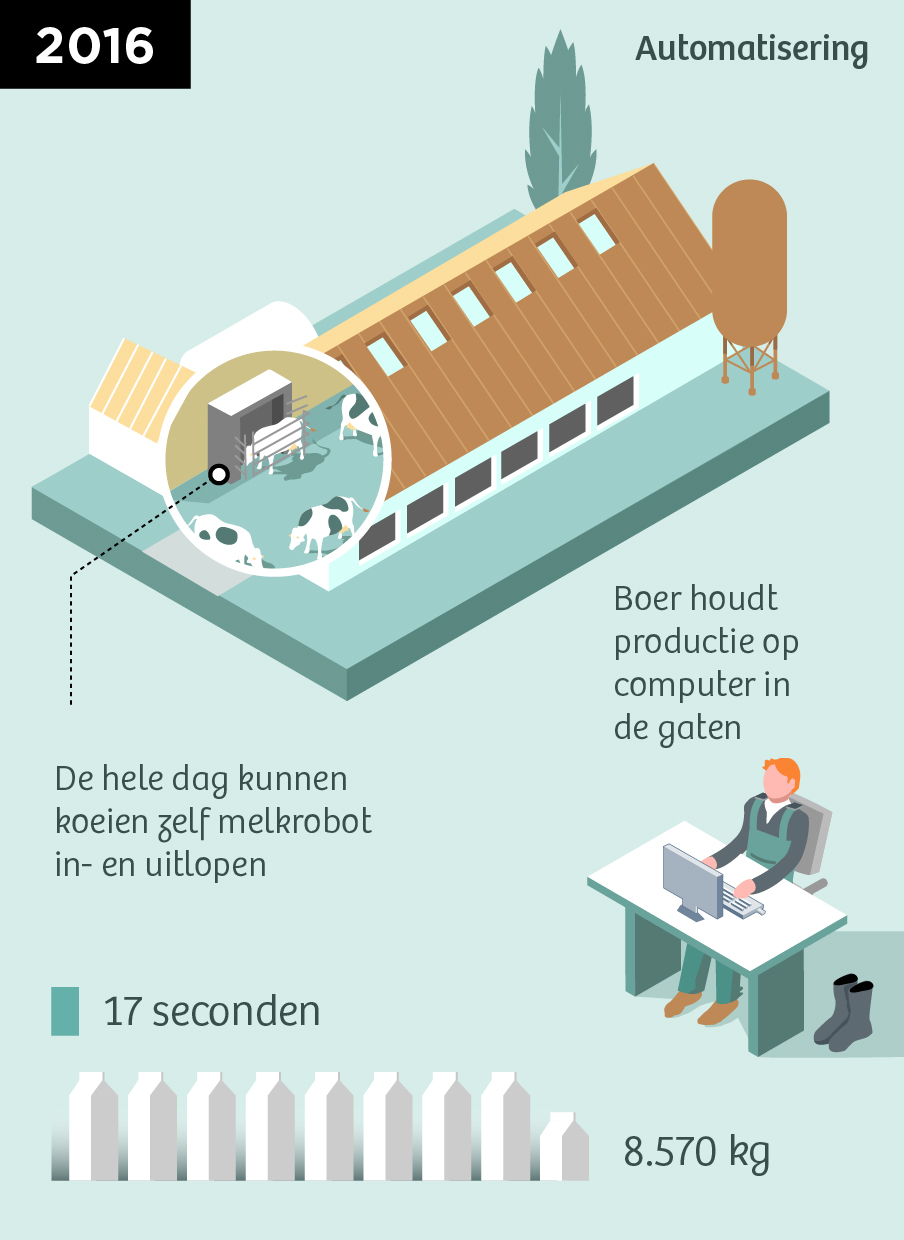
InfographicsDutch farmers have significantly increased milk production over the past century, now producing nearly forty million liters daily. This dramatic growth can be attributed to technological advancements, government policies, and agricultural innovations. Mechanization, such as milking robots, has revolutionized dairy farming, reducing labor intensity and improving efficiency. Farmers can now manage larger herds with precision, optimizing milk output through data-driven insights into animal health and productivity.
Selective breeding has also played a crucial role. By focusing on high-yield cattle breeds, farmers have enhanced milk quality and quantity. Improved animal nutrition, with scientifically balanced feed, supports consistent and robust production.
Government support has encouraged innovation, while the Netherlands’ advanced infrastructure and access to global markets allow farmers to thrive. Despite these achievements, environmental challenges, such as nitrogen emissions and land use, are pressing issues. Yet, Dutch dairy farming remains a global leader in balancing productivity with sustainable practices.